
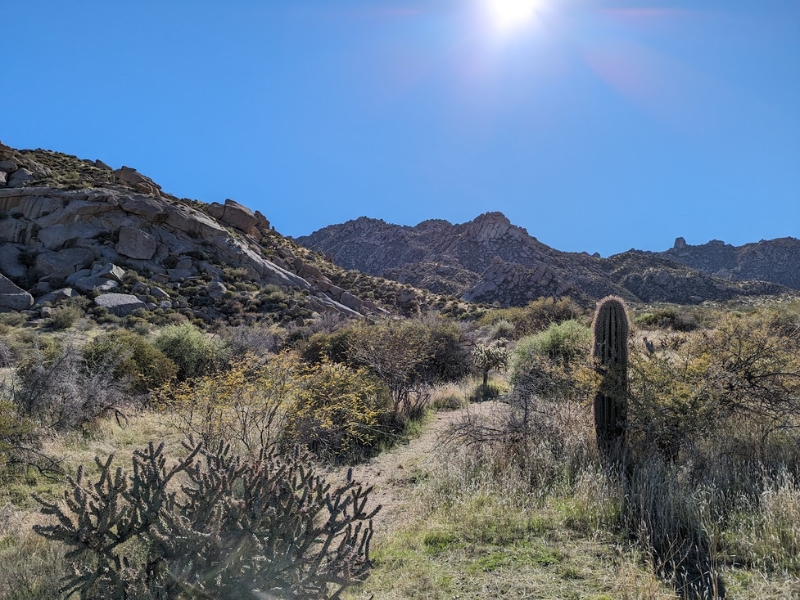
The Wheel turns again, and we enter the season of Imbolc or Candlemas, a celebration under the Goddess (Saint) Brigid that recognizes the return of the light as we move into spring and the first awakening of life begins. In Celtic tradition, the snowdrop flower’s first appearance signals spring’s start. As a desert Druid, I turn to signs of my surroundings.
Honoring Brigid in the Desert
As both a Goddess and a saint, the celebration of Brigid provides a unique opportunity for exploring the season’s themes. She embodies poetry, healing, and smithcraft—themes of creation and transformation that align beautifully with Imbolc’s energy. In a desert practice, she can be honored through creative endeavors such as writing, crafting desert-inspired art, or preparing a seasonal meal with native and local ingredients.
Signs of Renewal in the Desert
Here in the Phoenix area, the awakening of life takes on a form distinct from the Celtic landscapes of Brigid’s homeland. Instead of snowdrops peeking through frost, I see the first buds of the desert marigold or the emergence of delicate ocotillo leaves after winter rains. The light grows longer, and the air carries a subtle warmth that hints at the approaching desert spring. Imbolc invites us to pause and honor these signs of renewal, encouraging a connection to the land we inhabit.
Purification and Preparation
Imbolc is traditionally a festival of purification and preparation. In ancient times, hearths were cleaned, and new fires lit to signify renewal and the banishment of winter’s hold. As a desert Druid, this resonates in a practical and spiritual sense. In our dry and dusty climate, I clean my space and clear it with the essence of native desert plants like creosote. These acts of purification remind me that spring brings external changes and opportunities for internal growth.
The Sacredness of Water
Water holds special significance in the desert. Imbolc traditionally marks the lambing season, tied to abundant milk, a life-sustaining substance. For us in arid landscapes, water takes on that role. I make water offerings to the land I feel most connected to and give thanks for its presence. These visits are not only acts of gratitude but also reminders of the delicate balance of life in the desert ecosystem, where every drop is precious.
The Growing Light
Light is a central theme of Imbolc, symbolizing the growing strength of the sun. This light feels especially significant in the desert as it shifts from winter’s cooler, golden hues to spring’s bold, unrelenting brightness. Lighting candles or lanterns becomes an act of connecting with this changing light.
A Desert Expression of Imbolc
Imbolc’s message of renewal and hope resonates universally, but as a desert Druid, I find its expression deeply rooted in my environment. It reminds me that seasonal festivals need not rely on rigid traditions but can adapt to honor the unique spirit of the land. By observing the rhythms of the desert—its blooms, light, and resilience—I deepen my connection to the turning Wheel and to the timeless energies that guide us all.
As the season unfolds, I invite you to find Imbolc within your landscape. Whether in the frost of a northern winter or the warmth of a desert morning, the essence of this celebration remains: a call to notice the first stirrings of life, to prepare for the growth to come, and to honor the light within and around us.


 Joyful Aspen
Leave a comment