
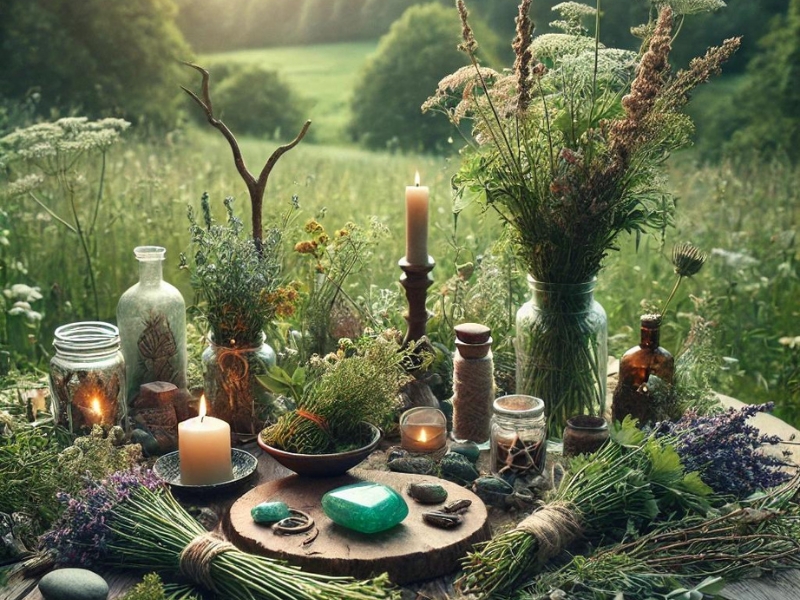
The Festival of the Divine Mother of Herbs, known in Polish as “Matka Boska Zielna,” is a cherished celebration on August 15th, coinciding with the Feast of the Assumption in the Christian calendar. This day is a vibrant blend of religious devotion and folk tradition, where communities come together to honor the nurturing and healing powers of the Virgin Mary, symbolized through herbs and flowers. As a Druid of Slavic descent, the Festival of the Divine Mother of Herbs provides a unique opportunity for me to deepen my connection with nature and celebrate the earth’s abundance.
A Tradition Rooted in Nature
Historically, the festival has deep roots in the rural lifestyles of Slavic people, particularly in Poland. It is a time when the earth’s bounty is blessed and offered in gratitude. Participants gather herbs, flowers, and other plants, which are then taken to church to be blessed. These blessed herbs are believed to hold protective and healing properties, and they are often used in households throughout the year for medicinal purposes, to ward off illness, and to protect against misfortune.
Syncretization with the Goddess Airmid
The tradition of blessing herbs and flowers has intriguing parallels with ancient Celtic customs, particularly the reverence of the Goddess Airmid, a figure in Irish mythology known for her healing abilities and deep knowledge of herbs. Airmid is a member of the Tuatha Dé Danann (people of the Goddess Danu) and is celebrated as a healer and herbalist. According to legend, she possessed a magical well of healing herbs and can bring the dead back to life using her knowledge.
The syncretization of these traditions, a process of blending different religious or cultural beliefs, reflects a common human inclination to seek harmony with nature and the earth’s healing powers. In the intersection of these beliefs, we see the enduring reverence for the natural world and the healing gifts it provides, transcending specific religious or cultural boundaries.
The Celebration in Druidry
Druids of all ancestry can take time on this day to connect to their practice as herbalists and thank the Green Mother for her gifts. Here are some ways Druids might celebrate this day:
Herb Gathering and Blessing
- Morning Herb Walk: Begin the day with a mindful walk in nature, focusing on gathering herbs and plants. This can be an intuitive process, allowing the plants to call to you, or it can be more structured, focusing on specific herbs with known healing properties.
- Blessing Ritual: Once gathered, herbs can be blessed in a simple ritual. This might include offering thanks to the land and the plants, invoking the spirits of nature, and dedicating the herbs to healing and protection. A prayer or chant, such as one invoking Airmid or a similar deity, could imbue the herbs with positive energy.
Creating Herbal Bundles and Tinctures
- Herbal Bundles: Create small bundles of herbs tied together with natural twine. These can be dried and used later in the year for rituals, offerings, or natural remedies.
- Tincture Making: For those with experience in herbalism, this is an ideal time to create tinctures and other herbal preparations. This involves infusing herbs in alcohol or vinegar to extract their medicinal properties. The process can be meditative and sacred, with intentions set for healing and wellness.
Meditation and Reflection
- Guided Meditation: A meditation focusing on the energy and spirit of the herbs can help deepen one’s connection with nature. Visualize the plants growing, feel their healing power, and meditate on the growth, death, and rebirth cycles.
- Journaling: Reflect on the personal significance of the herbs gathered and the lessons nature teaches. Journaling can be a way to document insights, experiences, and intentions for future use.
Ritual and Ceremony
- Altar Decoration: Decorate an altar space with gathered herbs, flowers, and symbols of nature. Candles, crystals, and images of the Divine Mother, Airmid, or other nature deities can also be included.
- Seasonal Ritual: Conduct a ritual acknowledging the turning of the seasons and the harvest. This includes bread, fruit, mead offerings, and prayers for continued growth and abundance.
Community Sharing and Learning
- Workshops and Talks: If part of a larger Druid community, organizing a workshop or discussion about herbalism, the folklore of herbs, or related topics can be enriching. Sharing knowledge and experiences helps build community and deepen collective wisdom.
- Herb Exchange: A communal exchange of herbs, seeds, or cuttings can be a way to diversify herbal resources and share the bounty of the earth.
Honoring the Land
- Land Stewardship: Engage in activities that honor and care for the land, such as planting trees, cleaning natural areas, or tending to a garden. This physical act of giving back to the earth reinforces the interconnectedness of all life.
- Connecting with Local Spirits: Acknowledging and offering gratitude to the spirits of the local landscape, whether through silent reflection or spoken words, can be an integral part of the celebration.
Through these practices, Druids can celebrate the Festival of the Divine Mother of Herbs in a personal and spiritually fulfilling way, honoring the wisdom of the natural world and the ancient traditions that continue to inspire.
While rooted in Christian and Polish folk traditions, the Festival of the Divine Mother of Herbs resonates with a universal theme of reverence for nature’s healing powers. Whether through the lens of Marian devotion, the wisdom of the Goddess Airmid, or the practices of modern Druidry, this celebration invites us to reconnect with the earth, honor the sacredness of herbs, and embrace the healing potential within ourselves and our natural world. As we gather herbs and offer them in gratitude, we engage in a timeless tradition that surpasses cultural and religious boundaries, celebrating the divine in all its forms.


 Joyful Aspen
Leave a comment